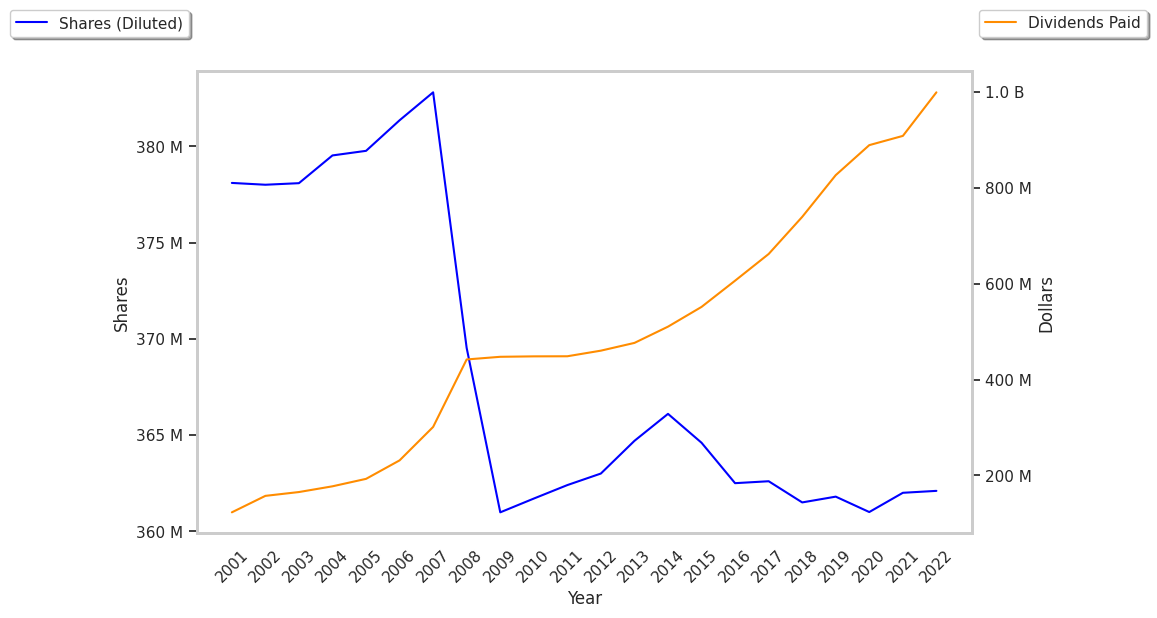
Commercial Services company Paychex is standing out today, surging to $94.26 and marking a 3.2% change. In comparison the S&P 500 moved only -0.0%. PAYX is -6.61% below its average analyst target price of $100.93, which implies there is more upside for the stock. However, the average analayst rating for the stock is hold -- a more pessimistic outlook than you might expect. Over the last year, Paychex has underperfomed the S&P 500 by 69.7%, moving -39.6%.
Paychex, Inc., together with its subsidiaries, provides human capital management solutions (HCM) for payroll, employee benefits, human resources (HR), and insurance services for small to medium-sized businesses in the United States, Europe, and India. The company is part of the industrials sector, which is considered cyclical. This means that sales revenues, and to some extent share prices, tend to increase during economic booms and then fall back to earth during busts. However, industrial companies can dampen this cyclical effect if they are invovled in multiple industries.
Paychex's trailing 12 month P/E ratio is 20.8, based on its trailing EPS of $4.53. The company has a forward P/E ratio of 16.0 according to its forward EPS of $5.9 -- which is an estimate of what its earnings will look like in the next quarter.
The P/E ratio is the company's share price divided by its earnings per share. In other words, it represents how much investors are willing to spend for each dollar of the company's earnings (revenues minus the cost of goods sold, taxes, and overhead). As of the third quarter of 2024, the industrials sector has an average P/E ratio of 24.03, and the average for the S&P 500 is 29.3.
We can take the price to earnings analysis one step further by dividing the P/E ratio by the company’s projected five-year growth rate, which gives us its Price to Earnings Growth, or PEG ratio. This ratio is important because it allows us to identify companies that have a low price to earnings ratio because of low growth expectations, or conversely, companies with high P/E ratios because growth is expected to take off.
Paychex's PEG ratio of 1.75 indicates that its P/E ratio is fair compared to its projected earnings growth. In other words, the company’s valuation accurately reflects its estimated growth potential. The caveat, however, is that these growth estimates could turn out to be inaccurate.
Paychex's financial viability can also be assessed through a review of its free cash flow trends. Free cash flow refers to the company's operating cash flows minus its capital expenditures, which are expenses related to the maintenance of fixed assets such as land, infrastructure, and equipment. Over the last four years, the trends have been as follows:
| Date Reported | Cash Flow from Operations ($ k) | Capital expenditures ($ k) | Free Cash Flow ($ k) | YoY Growth (%) |
|---|---|---|---|---|
| 2024 | 1,900,900 | 191,800 | 1,709,100 | -1.57 |
| 2023 | 1,897,700 | 161,400 | 1,736,300 | 11.07 |
| 2022 | 1,706,200 | 143,000 | 1,563,200 | 7.37 |
| 2021 | 1,589,700 | 133,800 | 1,455,900 | 27.5 |
| 2020 | 1,260,300 | 118,400 | 1,141,900 | -13.09 |
| 2019 | 1,440,900 | 127,000 | 1,313,900 |
- Average free cash flow: $1.49 Billion
- Average free cash flown growth rate: 6.8 %
- Coefficient of variability (lower numbers indicating more stability): 0.0 %
Free cash flow represents the amount of money that is available for reinvesting in the business, or for paying out to investors in the form of a dividend. With a positive cash flow as of the last fiscal year, PAYX is in a position to do either -- which can encourage more investors to place their capital in the company.
Another valuation metric for analyzing a stock is its Price to Book (P/B) Ratio, which consists in its share price divided by its book value per share. The book value refers to the present liquidation value of the company, as if it sold all of its assets and paid off all debts.
Paychex's P/B ratio indicates that the market value of the company exceeds its book value by a factor of 8, so the company's assets may be overvalued compared to the average P/B ratio of the Industrials sector, which stands at 2.89 as of the third quarter of 2024.
With a Very low P/E ratio, a higher than Average P/B Ratio, and generally positive cash flows with an upwards trend, we can conclude that Paychex is probably fairly valued at current prices. The stock presents mixed growth prospects because of its strong operating margins with a stable trend, and an inflated PEG ratio.