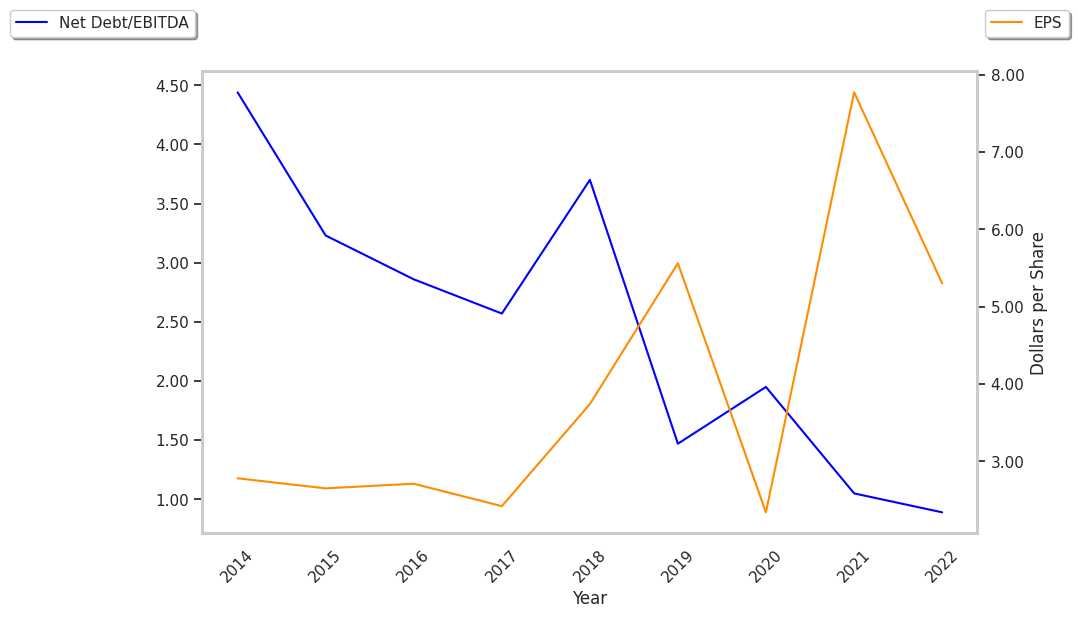
Diversified Financial company Synchrony Financial is taking Wall Street by surprise today, falling to $70.25 and marking a -4.0% change compared to the S&P 500, which moved 0.0%. SYF is -21.59% below its average analyst target price of $89.59, which implies there is more upside for the stock.
As such, the average analyst rates it at buy. Over the last year, Synchrony Financial has underperfomed the S&P 500 by -5.4%, moving 21.2%.
Synchrony Financial, together with its subsidiaries, operates as a consumer financial services company in the United States. The company is included in the financial services sector, which includes a wide variety of industries such as credit services, mortgage, banking, and insurance. Owing to this variety and the fast pace of innovation within these industries, investors may struggle to make sense of this sector.
As evidenced by the financial meltdown of 2008, seemingly healthy financial services companies — from insurers to investment banks — may see their market value plunge to zero in a matter of months. While the financial crash was likely a once-in-a-generation event, it highlights the volatility that is inherent to the sector. Financial innovation creates opportunities, but also new types of risk that investors and even the companies themselves may not fully understand.
Synchrony Financial's trailing 12 month P/E ratio is 7.3, based on its trailing EPS of $9.66. The company has a forward P/E ratio of 6.7 according to its forward EPS of $10.48 -- which is an estimate of what its earnings will look like in the next quarter. The P/E ratio is the company's share price divided by its earnings per share. In other words, it represents how much investors are willing to spend for each dollar of the company's earnings (revenues minus the cost of goods sold, taxes, and overhead). As of the third quarter of 2024, the finance sector has an average P/E ratio of 15.92, and the average for the S&P 500 is 29.3.
To better understand SYF’s valuation, we can divide its price to earnings ratio by its projected five-year growth rate, which gives us its price to earnings, or PEG ratio. Considering the P/E ratio in the context of growth is important, because many companies that are undervalued in terms of earnings are actually overvalued in terms of growth.
Synchrony Financial’s PEG is 2.14, which indicates that the company is overvalued compared to its growth prospects. Bear in mind that PEG ratios have limits to their relevance, since they are based on future growth estimates that may not turn out as expected.
To deepen our understanding of the company's finances, we should study the effect of its depreciation and capital expenditures on the company's bottom line. We can see the effect of these additional factors in Synchrony Financial's free cash flow, which was $9.85 Billion as of its most recent annual report. Over the last 4 years, the company's average free cash flow has been $8.26 Billion and they've been growing at an average rate of 6.2%. With such strong cash flows, the company can not only re-invest in its business, it can afford to offer regular returns to its equity investors in the form of dividends. Over the last 12 months, investors in SYF have received an annualized dividend yield of 1.6% on their capital.
Value investors often analyze stocks through the lens of its Price to Book (P/B) Ratio (its share price divided by its book value). The book value refers to the present value of the company if the company were to sell off all of its assets and pay all of its debts today - a number whose value may differ significantly depending on the accounting method. Synchrony financial's P/B ratio indicates that the market value of the company exceeds its book value by a factor of 1.55, but is still below the average P/B ratio of the Finance sector, which stood at 1.78 as of the third quarter of 2024.
Since it has a Very low P/E ratio, an average P/B ratio, and generally positive cash flows with an upwards trend, Synchrony Financial is likely undervalued at today's prices. The company has strong growth indicators because of a PEG ratio of less than 1 and strong operating margins with a unknown rate of growth. We hope you enjoyed this overview of SYF's fundamentals. Be sure to check the numbers for yourself, especially focusing on their trends over the last few years.